

In an exam-driven system, choosing a modern, diverse GCSE text can feel like a gamble. But Kit de Waal’s My Name Is Leon has given Alix Amrane and Caroline Ovel’s students insight into care, race, class, and shared humanity
Like most English departments, when we began to diversify our curriculum, we started with Key Stage 3, which we built around Adichie’s ‘The Danger of a Single Story’. Adichie argues that if we only ever show one version of people or communities, especially marginalised ones, we risk creating stereotypes, and worse, we rob people of their dignity and complexity. She argues that stories have power: to humanise, to challenge, and to connect. That principle guided a lot of our decisions, and we were proud of our progress.
Why did we feel so unsatisfied?
Of course, it was the Key Stage 4 curriculum: Lord of the Flies, Animal Farm, An Inspector Calls… decent literature. Brilliant even, but we were playing it safe. Unless we diversified our externally examined curriculum, we would perpetuate the single story that the really important literature is exclusively written by white men.
We therefore jumped at the opportunity when three new texts were announced by AQA, desperately hoping we’d like one of them. We needed it to be right for our school context and provide sufficient challenge; despite our desire for diversity, we would not have chosen one of these texts if we had not felt it was right.
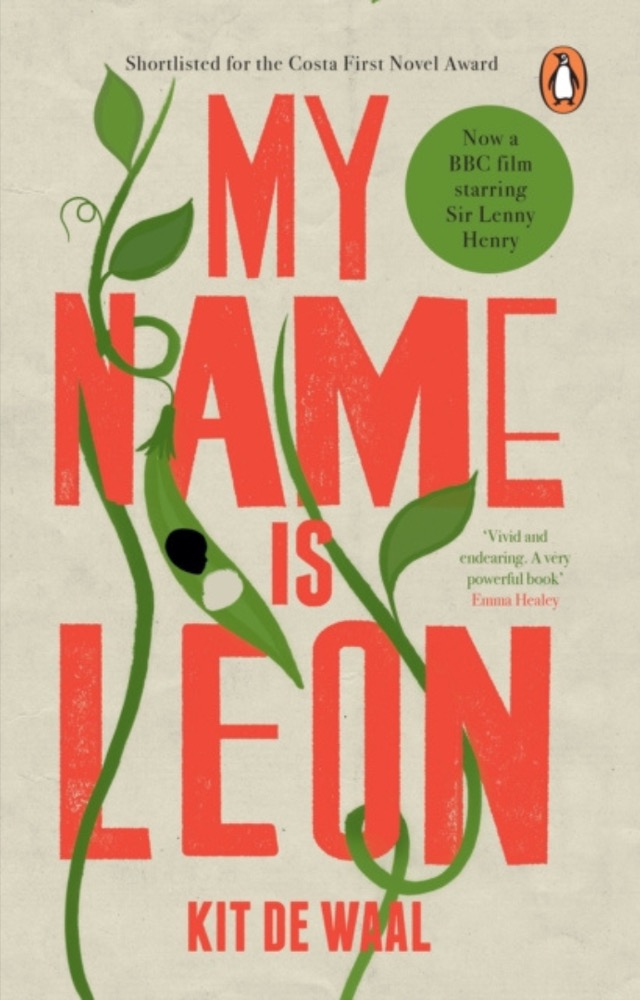
Why My Name is Leon?
We read and enjoyed all the new texts, but we fell in love with the character of Leon and with the quality of de Waal’s writing.
Aged ten, Leon is a mixed-race boy, supporting his mum with her new baby until he and his brother are taken into care. When his (white) brother is adopted, Leon is left floundering for identity and purpose. Written in 2017, the novel is set in 1981 Birmingham, against a backdrop of economic depression and ‘race riots’; sadly it resonates in modern Britain, and as de Waal points out, had this been set in 2017, Leon would have been ‘at home, on his phone, not out in the world’.
My Name is Leon is a challenging novel, but one written with great humour and sensitivity. We felt that this story would be important for our students, so we decided to go for it.
We scraped together money for new texts and collaborated on a scheme of work to teach the book to four Year 10 classes at the earliest opportunity.
We knew the risks. We knew it meant letting go of some established and respected texts that get definite outcomes, but what we and our students have gained from it is not measurable and we are English teachers, and after all, what do we stand for?
But is it ‘good’ enough literature?
Yes.
We were nervous about the lack of resources; in 2023, there were no study guides or Teachit worksheets. But once we got started, it was easy to identify de Waal’s characteristic methods and concerns.
De Waal says that she aimed to use language that a ten-year-old could understand, with the exception of a psychologist’s report, meaning that the text is accessible and inclusive. But if you’re worried about whether My Name is Leon is rich enough for analysis, rest assured: the close third person narrative voice is humorous and ironic; the structure makes use of analepsis and movement between interior and exterior worlds; there is symbolism to rival the conch in the central motifs of beanstalks and bikes and the characterisation is vivid. It is ‘proper’ literature.
Teaching compassion in an era of dislocation
Teaching My Name is Leon along with A Christmas Carol works brilliantly. These texts’ themes of shared humanity and social responsibility align, but de Waal brings them up to date, confronting society’s gender, class and racial prejudices.
My Name is Leon asks important questions:
As a society, how should we care for children whose parents cannot?
How do you balance a child’s need for love and for safety?
What is the right way to protest against injustice?
We teach relatively privileged students in our school, so it is doubly important that they ask these questions and gain compassion for others before they become adults who vote in elections. For many, their greatest learning has been about social justice, specifically the care system. Surely, that’s worth far more than maximising grades?
For example, Carol, Leon’s biological mother is a character who could be narrowly viewed as a ‘bad parent’. But we pay her empathetic attention. In the novel, Leon tries to wake Carol, who ‘won’t fight back or even open her eyes.’ Students wrote responses about a woman let down by systems that should support her and a mother who cannot fight back, rather than won’t. In this way, the novel addresses the gender balance in English, not only being written by a woman but also by portraying complex female characters we don’t find elsewhere.
The challenges
Triggering content
Reading this novel could be traumatising, especially for those with experience of care or family breakdown and it definitely requires sensitivity. Additionally:
- We write to parents about our curriculum content
- We give trigger warnings and indicate sources of support
- The 1980s setting provides a helpful buffer
Overall, parents of our adopted students are positive about the novel and one even said that My Name Is Leon has given them the opportunity to discuss their family situation together.
Handling context
We initially front-loaded teaching about context but now let it arise from the novel until the halfway point, when Leon ventures into the world. This provides opportunities for non-fiction reading at a point when it is relevant and impactful.
Managing the balance between English and PSHE learning in lessons
We are still working on this one! For instance, we used the term ‘Adultification’ too broadly at first. When we tried to correct that, it became a whole topic in itself. Back to the drawing board!
Resistance to change
We are lucky enough to have autonomy in what we teach and we have not forced any teachers to switch; they might look at ways to refocus their approach to another modern text. However, each year so far, one or two more teachers have been tempted to ditch the old and next year, more GCSE classes than not will be studying My Name is Leon.
If your school insists on everyone teaching the same text, you could suggest running a trial of a new, diverse text.
Discriminatory language
It isn’t easy reading depictions of racism, and navigating racist language, sometimes with only one student of colour in the room, is tough and exposing. We try to safeguard ourselves and our students by omitting racial slurs in our reading and through mindful handling of these themes. Sometimes we don’t get it right.
The audiobook (read by Sir Lenny Henry) is helpful but the question still arises: to pause or not? To censor or not? And should we actively point out offensive language that students might not see? For example:
- racialised physical descriptions
- 1980s racist slurs that have thankfully fallen out of favour.
We believe that it’s important to make space for difficult conversations, or they will surely happen elsewhere. It’s essential that everyone involved, including SLT, understands the positive intention and potential of teaching a text like this .
Length
It is long! You could use extracts if you wanted to, or set reading at home. We read the whole novel in class, sacrificing some exam practice and language teaching in favour of giving all students the experience of reading and discussing the novel together. Perhaps we will change our approach in future, but we are enjoying it too much for now.
What are the rewards of switching to Leon?

Student voice has confirmed what we hoped: this book is a window for our students, not a mirror. And that matters. In a world where our students spend most of their lives staring into algorithmic mirrors on their phones, English teachers must be intentional about making them look through windows.
And this novel truly enables us to bring diversity into our curriculum: race of course but also class, children in care, gender. It’s about intersectionality. My Name is Leon gave us an opportunity to put all of that in front of our students, not in a tokenistic way, but in a meaningful, emotionally resonant way.
We are teaching exam skills, but teaching this book has given the students more. It is a privilege as practitioners to be teaching a subject that is a means to teach empathy.
Tempted to change?
At the end of the day this wasn’t a case of waiting for the perfect conditions — because they never come. Go for it!