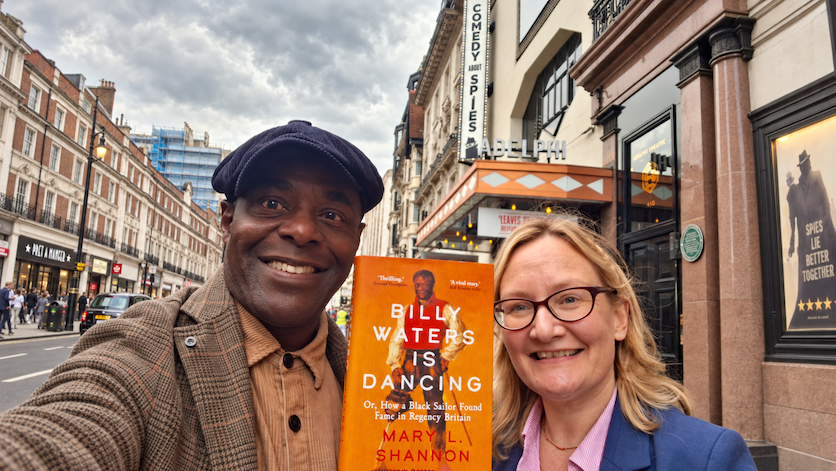
Since September 2025, Billy Waters: Songs from the Shadows has reached more schools, teachers, trainee teachers, and public audiences. The project has also expanded beyond the graphic novel through music, radio, podcasts, workshops, and teacher training.
Billy Waters: Songs from the Shadows is a free classroom resource for students aged 10–16. It tells the story of Billy Waters, a Black disabled sailor and celebrated street performer in Regency London, while asking students to consider marginalised voices, incomplete evidence, and how we read the archive. It can be used in English, History, Drama, Citizenship, and cross-curricular teaching.
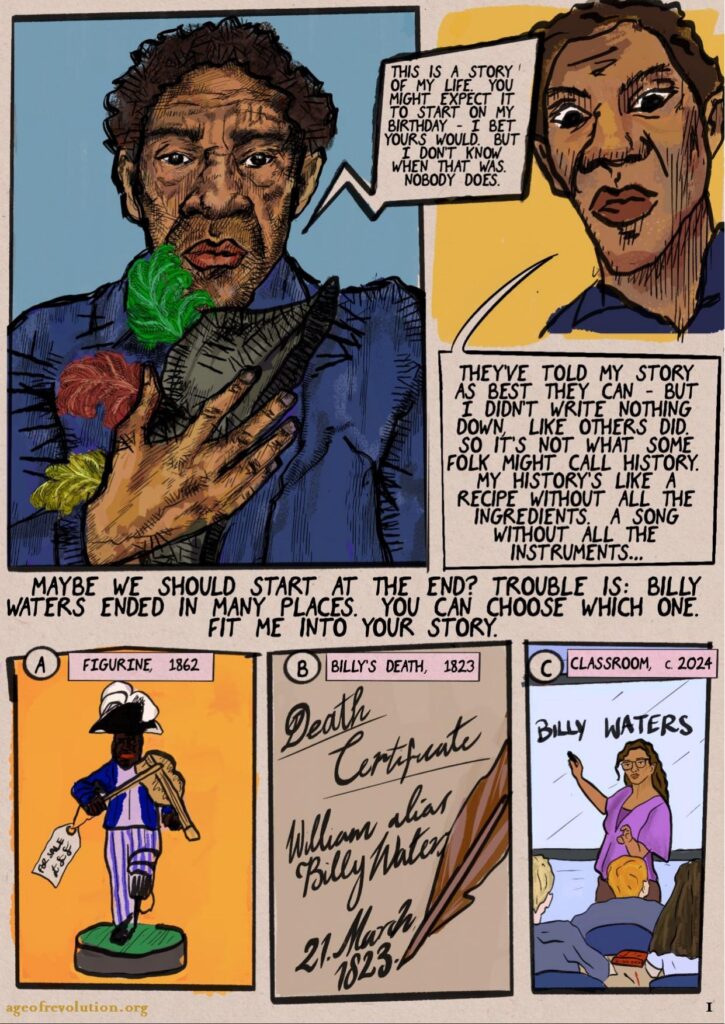
The resource was produced by the Age of Revolution project, funded by Waterloo200 Ltd. It was written by Ben Marsh, illustrated by Selena Scott, and developed from Dr Mary L. Shannon’s research and her book Billy Waters Is Dancing: How a Black Sailor Found Fame in Regency Britain.
The regularly updated site includes the graphic novel, lesson materials, teaching ideas, songs, soundscapes, videos, podcasts, and an order form for free printed classroom sets.
Teachers can now find all these materials on our new website.
What we have learned from schools
The project team has delivered fifteen workshops across Greater London and gathered feedback from more than 1,000 students. Their responses suggest that Billy’s story can challenge the assumption that Black and disabled people were absent from nineteenth-century British life. In one workshop, 37 of 40 students said that the session had changed their understanding of diverse histories in Britain.
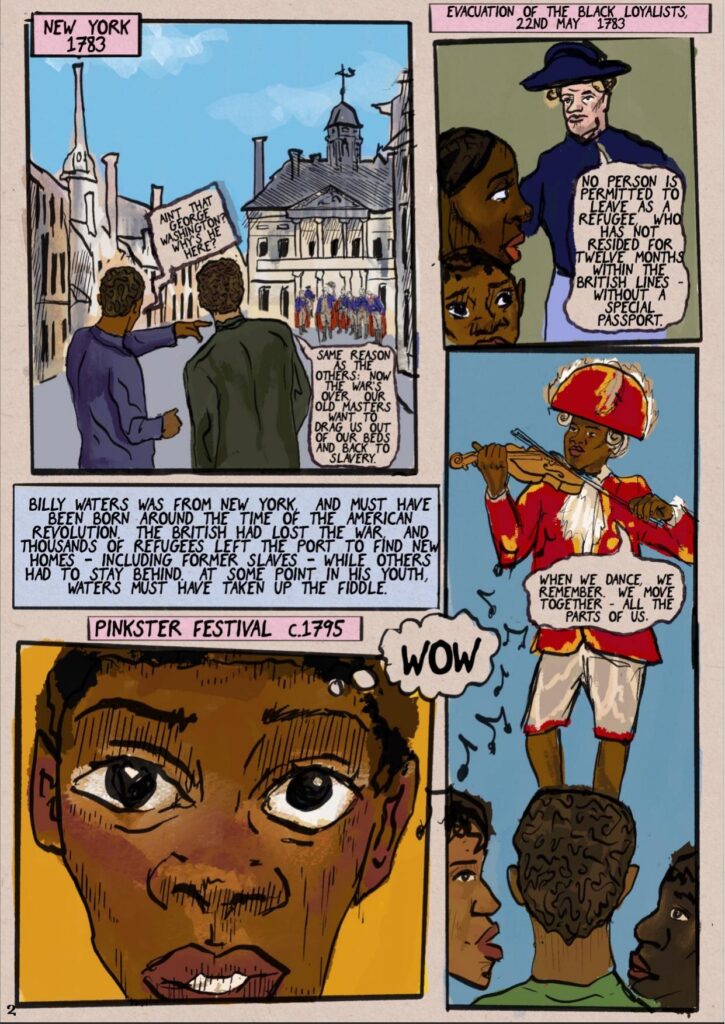
Schools are now using the materials in English, History, and PSHE from KS2 to KS5. Some are planning cross-curricular projects or incorporating the resource into longer schemes of work. One teacher described the effect of placing Billy ‘at the centre of history’, noting that it sparked curiosity and discussion among students.
The resources have also been used in teacher training at Roehampton and Bath Spa. Trainee teachers praised them for ‘motivating reluctant readers’ and modelling creative classroom practice.
From graphic novel to radio and podcasting
BBC Radio 3 broadcast King of the Beggars: The Music of Billy Waters on Sunday 28 June 2026. Presented by Paterson Joseph and featuring Dr Mary L. Shannon, the programme explores Billy’s musical world and his place in the history of Black British performance and folk traditions. It is available to listen to on BBC Sounds .
Teachers could ask students to compare the graphic novel with the radio programme. How does sound alter their impression of Billy? What can music or narration communicate that an image cannot? How do both forms respond to the fact that Billy’s own voice survives only in fragments?
Get involved
Teachers can download the resources or request a free printed classroom set through the Stuff of History website. We also welcome enquiries about school workshops, CPD sessions, and classroom visits.

Feedback from teachers who have already used the materials is equally valuable. We would be interested to hear how students responded, which activities worked well, and whether Billy’s story changed their understanding of nineteenth-century Britain, race, disability, or historical representation.
Resources and free classroom copies:
https://www.stuffofhistory.com/billywaters/
Workshops, talks, or feedback:
Himan Heidari, heidarih@roehampton.ac.uk
Follow project updates:
Instagram: @drmarylshannon and @ageofrev
Bluesky: @drmarylshannon.bsky.social and @ageofrev.bsky.social
X: @marylshannon