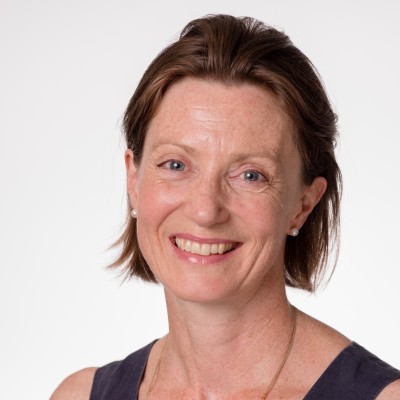
What is the BERA English in Education SIG and what does it do? Lorna Smith explains all
The British Education Research Association (BERA) — this year celebrating its 50th year – is one of the leading bodies of research-active practitioners in the UK. A key forum for educationists and academics, BERA runs conferences, seminars and projects across the country. It also hosts around forty Special Interest Groups, or SIGs.
The English in Education SIG is, as the name suggests, particularly relevant for readers of Teaching English. As explained on the BERA website, the SIG is about all things English-related. Founded in 2018, our SIG touches all phases of English education, including the elements of initial teacher training concerned with English teachers, and all aspects of our subject – speaking and listening, reading and writing, separately and together, in their broadest sense. It embraces literacy and literature. Many members of the SIG are also NATE members, and some are active in the NATE ITE Working Group.
Whilst there is complementary overlap between the SIG and the NATE working group, they do not replicate each other’s remit. The SIG is currently co-convened by Dr Lorna Smith and Professor John Gordon (UEA).
The SIG publishes termly newsletters to members, as well as running events of interest to SIG members. Most recently, these have included an online panel discussion entitled English across the divides: investigating perceptions of ‘English’ across the Key Stages in England with a particular focus on reading pedagogy and text choices across phases, with speakers representing primary, secondary and higher education; and, before that, English in Multi Academy Trusts: the changing shape of the subject and its impact on teachers – with representatives from MATs and initial teacher education.
We held an in-person conference at the University of Bedfordshire, Exploring issues in English, Education, and Social Justice: current trends in research and practice in summer 2023, which attracted teachers and researchers from across the country. This conference then inspired a BERA Blog Special Issue, which I edited, called Reconnecting English Policy. Contributions include a piece by Professor Robert Eaglestone on how practitioners of English have ‘disciplinary consciousness’ and that the subject has developed its own complex tradition, or ‘signature pedagogy’. Caroline Godfrey explored metaphors commonly used in English pedagogy, showing how the common notion of a journey isn’t always helpful. There were two perspectives on the impact of the mandatory GCSE English language resit for those Further Education students not gaining the magic grade 4, and Jo Bowser-Angermann looked at this from the perspective of FE students, and Kayte Haselgrove from that of an FE ITE practitioner.
Re-imagining the English curriculum with the SIG at the BERA Conference
In September 2024, the SIG for the first time ran a series of three linked sessions at the main BERA conference in Manchester, with the umbrella title English: Re-Imagining the Discipline. The sessions ran over one full day of the four-day event, exploring the aims, purposes and values in education as they relate to curricular design, with a special focus in English, thus enabling any attendee interested in English and/or curriculum development to follow through lines of thought. Given the recent change of government, the announcement of the Curriculum Review, and a shared understanding that ‘Something is rotten in the state of English’ (Eaglestone, 2021), the sessions were particularly timely: they galvanised real interest and good participant numbers.
The first session was a cross-subject panel, entitled What can we do with a curriculum? It explored curriculum structures across the UK, with specialist insights on curricular issues and experience both in English and beyond the subject. The session began with four expert panellists, who each outlined curriculum issues in their respective jurisdiction. Professor Feyisa Demie and Kulwinde Maude discussed how, in England, political rhetoric has closely aligned English with national identity and ‘our island heritage’, nurtured through a so-called knowledge-rich curriculum which excludes multiethnic, multi-racial content. Susan Chapman described the new Curriculum for Wales which, in contrast, offers a striking departure from the curriculum it has shared with England for many years, including the embracing of plurilingualism. Sharon Jones spoke to Northern Ireland, where the post-primary curriculum subject of Language and Literacy includes English alongside Media Education. This session was a fascinating opportunity to compare wider curriculum philosophies and polices and consider their various affordances and constraints.
The second session was a symposium, What can we do with an English curriculum? which examined issues in both primary and secondary English. Sarah Brownsword, a primary English specialist, began with a striking presentation grounded in her doctoral research. Citing literature indicating that more than a third of young people don’t feel represented in the books they read, she discussed how, while the number of children’s books featuring racially minoritised characters is rising (CLPE, 2023), few such books are actually used in primary schools. This is in part due to (white) teachers’ lack of confidence around how to teach such books, suggesting that racial literacy remains an area of professional need.
Andy Goodwyn then spoke about the important relationship between English and the mass media, and how that relationship is limited by the absence of a requirement to teach digital literacy or media studies in the current national curriculum. He discussed how, in this social media and streaming age, with concerns about artificial intelligence, it is crucial to open up English as a means of understanding, practising, critiquing and embracing what technology has to offer.
The session concluded with Isobel Wilkinson sharing her doctoral research, ‘Creatively Imagining New Possibilities for English’, in which she questioned the notion that there are no alternatives to the standardised approach to the subject that has emerged from the pressures of assessment and accountability. Beautifully illustrated by Isobel’s own haikus and collages, the talk was an inspiring reminder that we do not have to wait for a new curriculum to ensure English remains creative: there is room to do so now.
Finally, the third session was a culmination of the theme. Participants joined a workshop that explored how the English curriculum might be reconceptualised, through a play and through play. Firstly, participants read aloud extracts developed from research interviews with experts in the field of secondary English (including academics, university ITE lecturers, examiners, and experienced and new teachers from diverse schools) (Smith, 2023). Embracing the perspectives of these colloquists, participants then discussed their views on creativity within the English curriculum, teacher agency, and how to develop a balanced, humane, robust English curriculum. They went on to create a ‘3D Curriculum’ in small groups, using craft and modelling materials including fabric, card, paper and other items recycled from a scrap store to develop a metaphorical curriculum model that conceptualises what an English curriculum could be.
One group chose to create a marine conservation vessel navigating the choppy curriculum waters, caring for the school(!) of fish. The model deliberately highlights fish in water, inspired by the testimony of a Black student of English – told through the script – who hadn’t seen himself in texts he read at school, and said he had felt like a ‘fish out of water’. It was only when he got to GCSE level and his teacher recommended books beyond the set texts that spoke to him that he found he could swim with the tide. He’s now a successful teacher and novelist.
In this view of the curriculum, teachers steer the English boat, making decisions about what happens in their classrooms based on the students that they teach in the contexts in which they are based. It is a powerful metaphor, showing how the next iteration of the national curriculum for English might be less prescriptive and more responsive to teachers’ and students’ needs and interests, whilst remaining challenging and relevant. I was able to take this image to a major GCSE English assessment reform event held at Shakespeare’s Globe, ensuring that the message was passed on.
Where next?
In the summer, we are hosting a second in-person conference at the University of Bristol called Eco-English: exploring the subject’s potential to support sustainability and Climate Change Education, and prepare citizens of the future. In the light of the Department for Education’s strategy for sustainability and climate education, which perpetuates disciplinary boundaries by locating sustainability education only in the national curricula for science, geography and citizenship, we are excited to offer a forum for English specialists to consider how sustainability education and related pedagogies are already and can be further embedded in English education.
You have to be a member of BERA to join the SIG (membership is around £100 per year) but, as with NATE membership, the fee is tax-deductible; and once you are a member of BERA, you have access to multiple other SIGs too which are relevant to English.
For instance, the Philosophy of Education SIG might address the nature of English, while models of English, boundaries and overlaps with other disciplines might be explored in the Curriculum, Assessment and Pedagogy SIG. The Creativities in Education and the Literacy and Language SIGs speak for themselves.
There are also SIGs in cross-curricular areas relevant to English (Digital Education; Education for Environmental Sustainability; Race, Ethnicity and Education; Social Justice; Inclusive Education); SIGs that concern the function of English in the life course (Higher Education, Post-Compulsory and Lifelong Learning); and SIGs that address institutional, sectoral and international perspectives on the subject or its first-language/L1 equivalents (Comparative and International Education; Education Effectiveness and Improvement; Educational Leadership; Teacher Education and Development). As this list suggests, BERA membership is particularly useful for any English teacher interested in research, from Master’s level to Professorial. Do consider joining!
Further Reading
CLPE (2023) Reflecting Realities: Survey of Ethnic Representation within UK Children’s Literature 2022. London: Centre for Literacy in Primary Education.
Department for Education (DfE) (2014) National Curriculum in England: English Programmes of Study. London: Department for Education.
Eaglestone, R. (2021) ‘“Powerful Knowledge”, “Cultural Literacy” and the Study of Literature in Schools’, Impact, 26.
Smith, L. (2023) Creativity in the English Curriculum: Historical Perspectives and Future Directions. London: Routledge.