
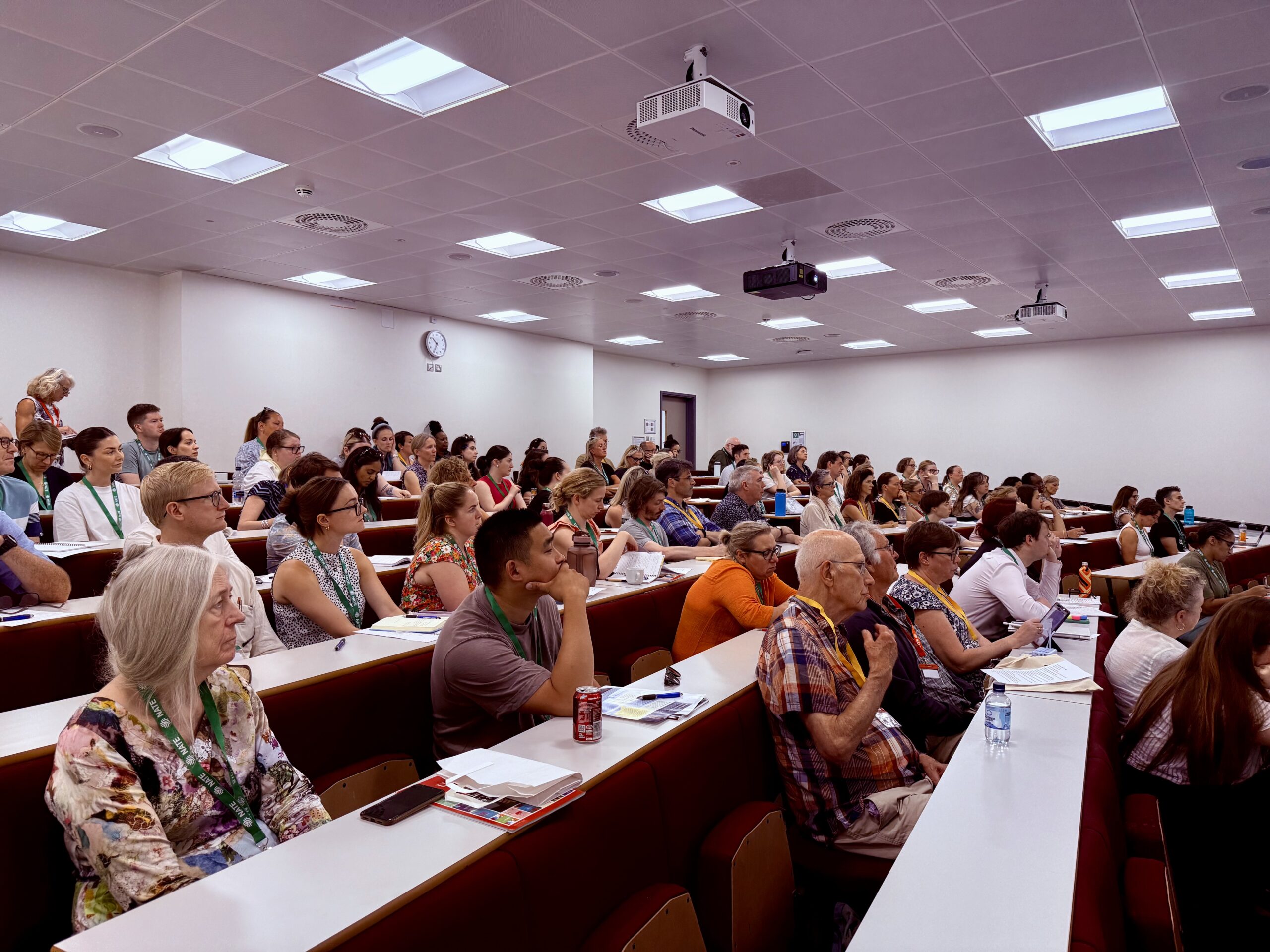
More than 100 English teachers, researchers and ITE providers gathered at Kingston University on Tuesday 1st July for our highly anticipated NATE Conference 2025, a one-day event themed around Innovation, Inclusion, and Identity. The conference offered an inspiring opportunity for people in the English teaching community to explore evolving practices in English education, exchange ideas, and build a shared vision for the future of the subject
Welcome and keynote
The day began with a lively arrival and networking session, where delegates met each other and our visiting exhibitors over coffee before being welcomed by Professor Andy Goodwyn, who delivered the opening keynote. Andy explored the conference themes, urging English teachers to champion a pedagogy that is not only academically rigorous but also deeply humane, inclusive, and responsive to contemporary cultural shifts. His remarks framed the day’s discussions with a reminder of the ethical and intellectual responsibilities at the heart of English teaching.
Morning sessions: creativity, curriculum and assessment
The first round of workshops and presentations reflected a rich array of interests and innovations. Tom Davey’s interactive workshop on active approaches to Shakespeare had participants rethinking how to bring Shakespeare alive in the classroom. Meanwhile, Rachel Fenn led a compelling session on teaching a gender-balanced curriculum, challenging delegates to reconsider how texts and classroom discussions reflect — and shape — students’ understanding of gender.
Assessment reform was also on the agenda. Jonathan Morgan, representing AQA, delivered a detailed presentation on enhancements to the GCSE English Language exam, sparking conversations around accessibility, fairness, and curricular alignment. Delegates praised the practical insights offered.
Other standout presentations included the The Nottingham Stylistics Toolkit by Peter Stockwell and Jessica Norledge, which showcased tools for linguistic analysis in creative and accessible ways, and Julia Sutherland’s discussion of the Faster Read approach, which emphasized reading fluency and comprehension strategies.
A pause for reflection — and coffee
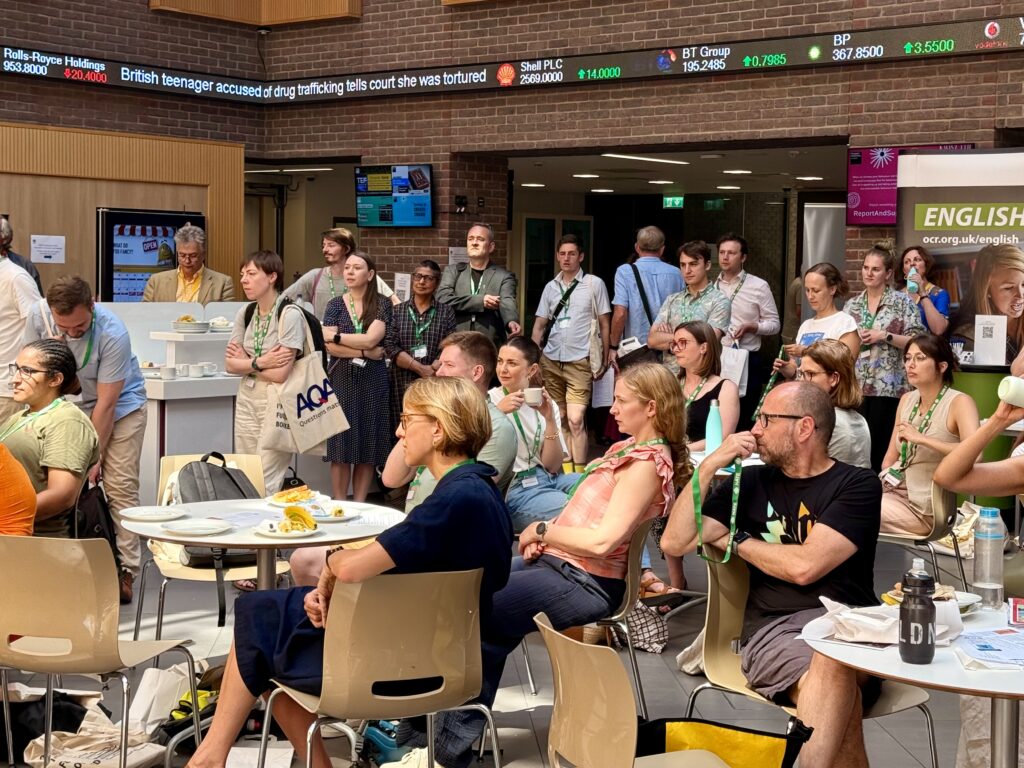
Mid-morning refreshments gave attendees the chance to visit the conference’s popular exhibitor stalls, featuring leading publishers and educational organisations including Pearson, AQA, Collins, and the British Library. Associate exhibitors such as First Story, the Graphic Novel Project, and Bright Torches added further richness to the day, offering resources, insights, and creative collaborations.
Late morning: AI, diversity and the spoken word
The second session of the day reflected a growing desire to embrace technology and diversify curriculum content. Stephanie Holt’s workshop on using AI for learning in the English classroom drew one of the largest audiences, engaging teachers in practical ways to use AI tools ethically and imaginatively.
Equally impactful were sessions that addressed inclusion and oracy. Sarah Davies presented practical strategies for embedding oracy into English lessons, while Alix Amrane and Caroline Ovel ran a session on diversifying the Key Stage 4 curriculum through Kit de Waal’s novel My Name is Leon, inviting reflection on representation and belonging. Peter Thomas’s exploration of literacies for life reminded delegates of the broader social and civic functions of English education.
Book launch and afternoon insights
After a well-earned lunch and networking period, the conference reconvened with a celebratory book launch: Secondary English for Generation Alpha: Humane Pedagogy for Local, National and International Contexts, edited by Lorna Smith. The launch emphasised the conference’s central themes and received enthusiastic praise from teachers looking for frameworks to support our new generation of students.
The third session offered a variety of creative and critical perspectives. Francis Gilbert’s mindful creative writing workshop encouraged participants to consider the emotional and cognitive benefits of writing practices rooted in mindfulness. Meanwhile, Ty’rone Haughton and Natasha Ryan’s presentation on poetry and wellbeing in schools proved deeply moving, blending pedagogy with personal experience and mental health advocacy.
Literary diversity remained a key focus. Thishani Wijesinghe and Elmina Ferguson explored strategies for teaching Girl, Woman, Other and Passing at A-Level, providing a powerful session that centred race, gender, and intersectionality. Elsewhere, Chloe Chelsea presented a rehearsal-based approach to The Tempest, drawing on ecocritical and race-conscious lenses, while Pete Hobbs demonstrated the effectiveness of First Story’s approach to creative writing.
A space for dialogue and collaboration
The Multicultural and Diversity Working Group hosted a meeting on collaborative learning and exploratory talk, offering a chance for delegates to share aspects of their classroom practice.
Closing reflections: a shared commitment
I concluded the conference with a final talk, drawing together the day’s many threads into a cohesive reflection with the support of workshop leaders. Our delegates were encouraged to take what they had learned back into their schools and classrooms, championing inclusive, student-centred, and progressive approaches to English education.
We’ve had some really positive feedback from delegates who attended the conference. Comments have reflected the collaborative and supportive network of teachers and education professionals who are the foundation of all of the work that NATE does, as well as the strong community of practice represented amongst the delegates and in the wider English teaching community.
In a world of change, the conference confirmed that English teachers remain powerful advocates for empathy, conversations around identity and cultural understanding — values more vital than ever.
