Sarah Olive and Furzeen Ahmed, from Aston University, share insights from the Diverse Literature in Schools project, which highlights the lack of Global Majority authors in the texts pupils study — and offers free PDF and video resources to help teachers, librarians, and parents discover a richer, more representative literary landscape
How many texts by authors from the Global Majority do you teach? ‘Global Majority’ refers to people who are Black, Asian, Brown, dual-heritage, indigenous to the global south, and or have been racialised as ‘ethnic minorities’. People from the Global Majority represent around 80% of the world’s population, according to educator and activist Rosemary Campbell-Stephens, who is credited with inventing the term.
You could ask yourself the same question using related terms instead, for instance, ‘authors of Colour’ or ‘BAME authors’. And if your answer is ‘not many’, you might pause to consider what’s stopping you from teaching more. Read on to see if the barriers you identify resonate with those of teachers who have engaged with the Diverse Literature in Schools project and find out about the project’s free online resources for discovering more diverse texts.

The project is led by me, Dr Sarah Olive and Dr Mary Davies, from the Communication and Culture department at Aston University. Gwawr Maelor and Lowri Jones, from the School of Education at Bangor University, also contribute to its work, especially around texts and characters in Welsh-language literature. In 2022, we asked teachers of literature at 47 secondary schools in Wales what texts they taught — in English, Welsh, drama and Modern Foreign Languages. When we looked at the results in terms of authors’ racial or ethnic diversity, we found six texts by Global Majority authors identified in total. These texts were in English and French: no Global Majority authors existed among the Welsh-language texts taught. If you’re wondering exactly which authors and titles were taught, you can find out here(they are listed on page 2).
Teachers with whom we discussed these results commonly identified the discoverability of diverse texts for their pupils as a problem. In response, the project produced PDF and video resources for teachers, librarians, and parents to help them find suitable texts for their young people with diverse characters and creators — authors, illustrators and adaptors. These resources are freely available, collected together on a Padlet, but you can also use the links directly to individual resources at the end of this post. The resources are relevant to those working with both primary and secondary pupils, looking for both class texts and reading for pleasure recommendations that represent Global Majority authors and characters.
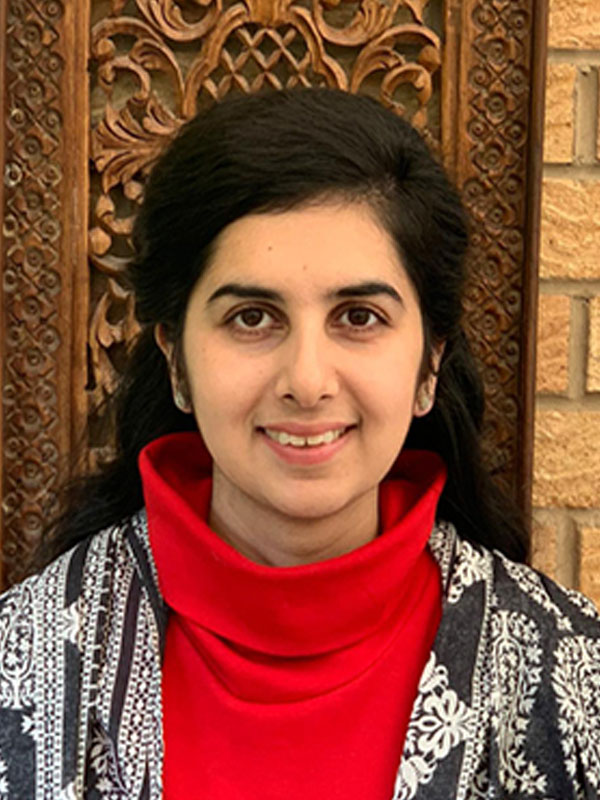
The resources have been shared by the Welsh Government with teachers across Wales on Hwb, its Professional Learning website. They have also been shared with educators by BAMEed, Show Racism the Red Card, and TeachIt. They are being used in Initial Teacher Education, English as an Additional Language, and dyslexia support settings across the UK. Here, I talks to my Aston colleague and NATE’s Diversity Officer, Dr Furzeen Ahmed, about the resources and the process of making them.
What was your rationale for selecting the resources cited in the booklets?
In the ‘Diversifying texts’ booklets and videos, we wanted to avoid needlessly duplicating the excellent booklists and databases that came out of the energy to diversify the curriculum in the wake of the Black Lives Matter protests. Instead, we decided to pull those lists and databases together in a guide, give users a brief overview of their main features, and their URLS. That way users could choose which existing resources are best for them to engage with.
An added benefit of this approach has been that, although our explicit focus is on diversifying literary texts taught in terms of Global Majority authors and characters, we could flag where resources support representation of other aspects of diversity: disability, neurodiversity, migration and forcibly displaced people, for example.
How were stakeholders, such as teachers, involved?
The project could not have happened without the involvement of Dr Richard Watkins and his colleagues at GwE. GwE was the local school improvement service for North Wales, one of five such regional organisations that existed in Wales (until summer 2025). They helped us access teachers across North Wales to identify barriers to diversification. In the context of Curriculum for Wales (2022), which promised greater autonomy for teachers over content, the challenges they most often identified were finding diverse texts appropriate for the age and level of their readers, resources to support teaching these texts (such as lesson plans and activities) and time and money to do this work. And not necessarily in that order.
We tried to respond to these in creating the resources — signposting teachers to good sources of information on suitability, flagging where resources to support teaching these diverse texts are available, being concise – to respect time pressures – and making our resources freely accessible. Research such as the Lit in Colour and Centre for Literacy in Primary Education’s Reflecting Realities reports have made a strong case for the need to diversify texts taught and recommended to pupils, as well as the benefits of investing time and other resources in this work. This includes, but is not limited to, pupils’ attainment, engagement, senses of self-esteem and belonging. We want to support teachers who have committed to investing time in diversifying texts by ensuring first steps are productive and energising, rather than involving ‘information overload’ or materials of variable quality and relevance.
What were the challenges in producing these booklets?
There was no shortage of existing resources or texts to include for the English booklets. However, no sooner had we published our guides, than we found — or were told about — yet more resources and texts. Plus, new resources and texts are continually published. One of the strengths of collecting our resources on a Padlet has been that we were able to create and maintain an ‘updates’ section. This draws attention to resources which we weren’t aware of when we designed our guides. These include the wonderful Inclusive Books for Children website and Books Council Wales’ Rhyngom project, which fosters original work in Welsh as well as translations of diverse books from English to Welsh.
Another challenge is getting a sense of how people use booklets and videos beyond the moment they initially discover them. We have collected lots of wonderful initial reactions: 100% of those who completed a feedback survey say they’re glad they explored the resources and that they plan to share them with others. One Deputy Head told us: ‘I’ve been so impressed with how well designed all the materials seem — it’s great work and well presented,’ which means a lot to us. However, we need to know if and how they are making a difference to people months later. Have they changed what you teach or how you choose texts? Do tell us! (Email below, or fill in a short online survey if you prefer to be anonymous).
You make an interesting link between the creator’s racial identity and the ratio of Characters of Colour in a text. Why does representation matter in the production of the texts and how they are received by young readers?
Yes, I do this explicitly in the ‘Diverse Illustrated Shakespeare for Children’ booklet. I read Melanie Ramdarshan Bold’s book on Inclusive Young Adult Fiction and Reflecting Realities reports before I began the project. Such research differs over whether Global Majority creators, be they authors or illustrators, are associated with texts having greater numbers of diverse characters. In my diversity audit of 83 illustrated Shakespeare books for children and young adults, a connection was visible between having Global Majority creators and the number of Global Majority characters — whether these characters were actors, schoolchildren studying Shakespeare, audience members, historical figures, or roles in Shakespeare. If we want to see more diverse characters portrayed in texts, involving more diverse creators is unlikely to be the panacea, but it should be part of the approach to tackling under-representation of Global Majority characters or, to take another perspective, the over-representation of White characters.
In and beyond Shakespeare for young people, representation matters in the production of texts and how they are received because all young readers deserve a plurality of role models among authors, illustrators and translators. It also matters because the ready availability of texts created by members of the communities represented on their pages is a vital part of any literary diet. This remains true whether you like to talk about ‘Own Voices’ stories, ‘authentic’ representation, or prefer to eschew such terms.
You mention the resources are to help find ‘contemporary’ reads for children and young adults. To what extent do you think this focus provides young readers a deeper understanding of how racial and ethnic diversity has been responded to by English-language texts at a historical, cultural, and political-level?
I’d forgotten I used the phrase ‘contemporary’ in the booklets on diversifying texts in English and Welsh! I can’t remember exactly how it came about. I suspect we wanted to flag that our resources will help people find works that were not available at the height of the Black Lives Matter, We Need Diverse Books, and similar movements. Some of the teachers we met emphasised wanting to find the very latest publications and we responded to that.
However, some of the book lists and databases we showcase do feature historical texts and support teachers to explore representations of race historically. These include the ‘Penguin’ entries and Books for Keeps’ ‘Beyond the Secret Garden’ column, by Darren Chetty and Karen Sands O’Connor.
Remind us, what are the resources and where can we find them?
NATE members will probably find the resources linked to in this list the most useful, but everything is on our Padlet. We’re very much open to suggested improvements and additions, in case we get the opportunity to revise our resources in the future but also because positive feedback will help us get the support to continue and expand our work. Please email me s.olive1@aston.ac.uk (or drop your thoughts in this short survey). Hover over and click the links below to access the materials.
Diversifying Texts in English — PDF booklet
Diversifying Texts in English — video (subtitles available) — showing how to make the most of the booklet
Diverse Illustrated Children’s Shakespeare — PDF booklet
Reading for Pleasure — research bites video (subtitles available) — featuring Furzeen and a few more colleagues (and she didn’t even ask me to include it!)
Further reading
Ramdarshan Bold, M. (2019) Inclusive Young Adult Fiction, London: Palgrave.
Chetty, D. and K. Sands O’Connor (2024) Beyond the Secret Garden, London: EMC.
Elliott V., L. Nelson-Addy, R. Chantiluke, and M. Courtney (2021). Lit in Colour: Diversity in Literature in English Schools.London: Penguin & Runnymede Trust.
Elliott V., D. Watkis, B. Hart, and K. Davison (2024). The Lit in Colour Pioneers Pilot. London: Penguin & Runnymede Trust.