

From zines to protest poetry, an East London college has transformed the Extended Project Qualification into a year-long creative writing incubator. Pete Lawler explains how it works — and why it could work in your school too.
‘Sir,’ my students used to say to me with no small amount of frustration, ‘is there a creative writing A-level? Or any A-level course that emphasises personal expression or creative writing of any kind?’
And I always had to turn with resignation to respond with a wistful ‘alas,’ much to the disappointment of the inquisitive young person. ‘No,’ I would continue, ‘there’s not. But you can take A-level Language!’ No shade to A-level English Language, but it always rang hollow to the aspiring Chimamanda Ngozi Adichie or George the Poet.
With the exception of a brief five-year experiment from 2013–18, there has never been a creative writing A-level. It has long been a frustration for English teachers — that rare genus of educator drawn to the profession through a love of literature and the written word — that as learners get older, the curriculum narrows. Teaching is increasingly dictated by assessment frameworks, and there’s little room to emulate the innovators of the written word by finding one’s own voice.
Changing the game
But what if we could rewrite the rules?
Better yet, what if we could play an entirely different game?
At East London Arts and Music (ELAM) in Bow, we’ve been doing just that for nearly a decade — and with thrilling results.
ELAM is not a typical college. It’s an arts specialist institution with a mission to ensure UK culture reflects the diversity of UK voices. Students come to study music, film and television and game design. The ethos is pure creative freedom — encouraging young people not to find a place to fit in, but to carve their own space and challenge society to fit around them.
In this environment, the idea of building a creative writing course that leads to the Extended Project Qualification (EPQ) was a natural fit.
Why the EPQ works for us
Most EPQs take the form of a 5,000-word academic research thesis — invaluable for many, but hardly the most exciting prospect for a young storyteller. There are actually four EPQ formats: the thesis, the field study, the performance, and the artefact. The artefact option — creating something and documenting the process — aligns perfectly with ELAM’s culture.
Over two years, all 60–70 students in our Language Arts cohort undertake the course. In Year 12, we explore multiple genres — poetry, fiction, non-fiction — alongside spoken word, protest writing, and visual storytelling. In Year 13, they focus on their chosen form, producing a substantial artefact supported by wide research, reflection, and presentation.
We’ve been consistently rewarded with excellent grades across the whole cohort, and last year Ofsted described the programme as ‘beyond what an EPQ could be’ in their ‘outstanding’ judgement.
Creativity thrives within structure
Our rules are simple but deliberate.
We make the course feel as different from GCSE English as possible — partly to avoid negative baggage, partly to be honest about what we do. We no longer call ourselves the English Department, but Language Arts.
The curriculum is deliberately representative. Byron and Blake are still there, but interleaved with Rupi Kaur, Kae Tempest, Aja Monet, and Harry Baker. Romanticism sits alongside Instagram poetry. Protest poetry is studied with the same seriousness as the Romantics. Students can’t become what they can’t see.
By removing terminal exams, we remove the pressure to perform in timed conditions, shifting focus to drafting, editing, and refining for a genuine audience.
What it looks like in practice
One of our Music students created Tables Turnt, a print magazine about the history of DJing in the UK. Initially sceptical about the EPQ, he found his spark when given the freedom to write about a topic he loved — even developing a defiant tagline: ‘It’s about more than just pressing a button and playing.’
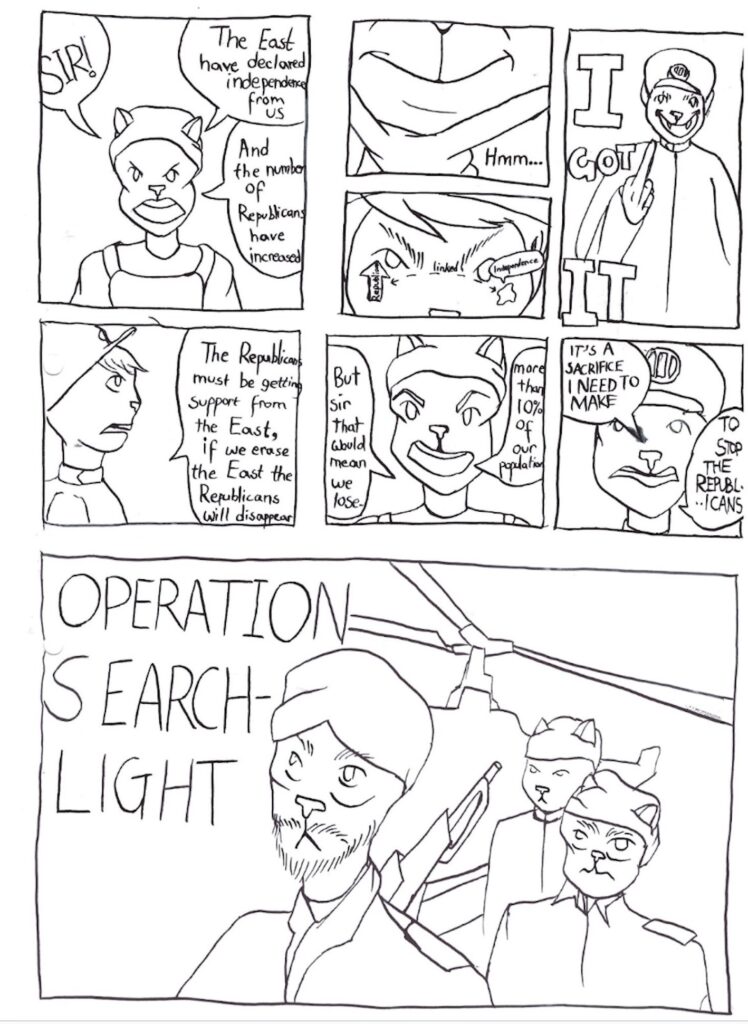
Another student, on our game design course, produced a graphic novel in the style of Art Spiegelman’s Maus, using aliens and animals to allegorise the war in Bangladesh. Researching the project led him to have long conversations with his father, who had lived through the events. Those interviews became the backbone of his primary research, and the storytelling skills he developed fed directly into his game design work.
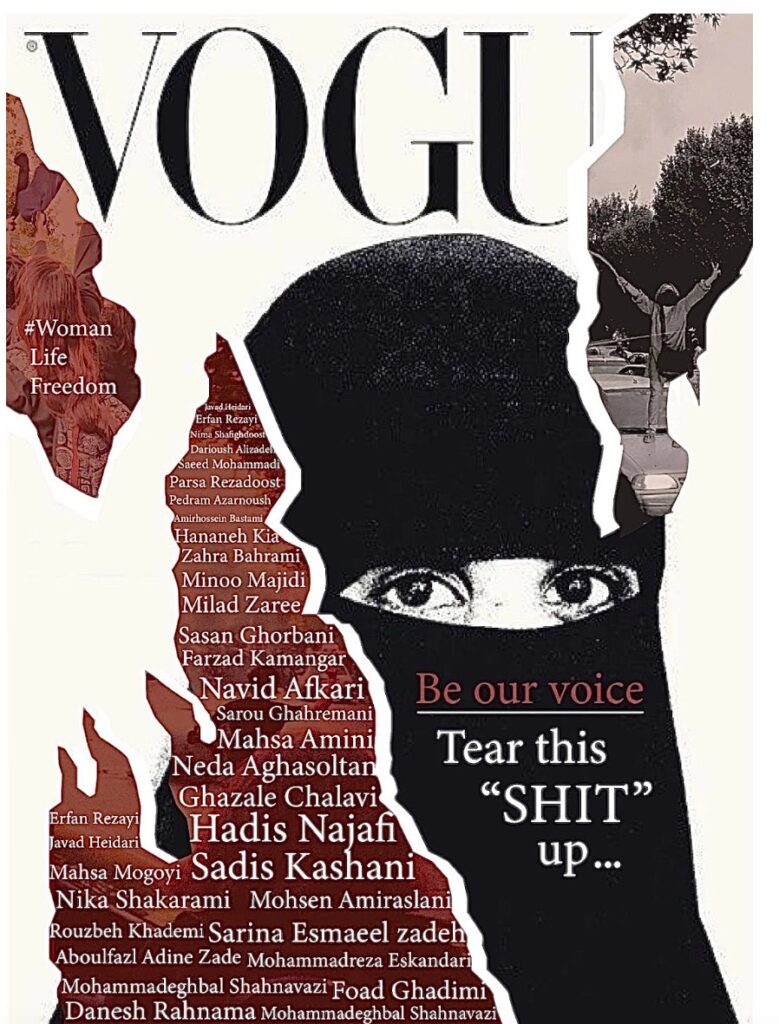
In the same year group, a young writer produced a powerful collection of protest poetry responding to the death of Iranian dissident Mahsa Amini. The project became both a deeply personal exploration of her cultural heritage and a way to raise her songwriting on her Music course to a new level — proof of how the EPQ can connect the political and the personal in meaningful ways.
Beyond the utopia
Of course, it’s not all utopian. We still encounter the same challenges as other settings: students losing momentum after the initial excitement, or struggling to balance the EPQ with their main course. It’s still a lot of work — but in the best circumstances, it’s a labour of love.
And while ELAM’s resources and creative culture give us a head start, the model is adaptable. Any school offering the EPQ could take the artefact route, even on a small scale, and integrate more creative writing into its provision.
A call to action
The exam board requirements for the EPQ already allow for far more creativity than most schools realise. Planning, research, and evaluation are mandatory — but the artefact can be a poetry collection, a film script, a graphic novel, or a hybrid of forms.
If you start with a small pilot group, perhaps with Year Nine or Year Ten students, you could interleave creative writing with set texts — for example, studying The Girl with the Louding Voice alongside creative work inspired by it. Or you could have a small cohort study Chimamanda Ngozi Adichie’s Dream Count, then branch into researching pandemic narratives and creating a speculative/dystopian work about a future outbreak.
The key is to view the EPQ not as an add-on but as an engine for authentic writing — a way to give students a tangible, high-quality piece of work in which they can take great pride.
And that’s the real revolution: enabling young people to graduate not just with grades, but with a body of work that reflects their own voice, their own vision, and their own story.
Featured image: iStock/vgajic