Barbara Bleiman explores what the current momentum around oracy means for English classrooms, drawing together research, policy developments and classroom practice to highlight the big ideas teachers should keep in mind as they prepare for the next phase of the National Curriculum.
The Curriculum Assessment Review, published in November 2025, flagged up oracy as a key area for development, in the wake of Sir Keir Starmer’s public commitment in a speech in July 2023 to giving it a higher profile in school learning where he said: ‘Let’s raise the importance of speaking skills — “oracy” as academics call it. Because these skills are absolutely critical for our children’s future success. First and foremost — for academic attainment. Talking through your ideas before putting them on the page, improves writing. Structured classroom discussion — deepens thinking. But it’s not just a skill for learning, it’s also a skill for life. Not just for the workplace, also for working out who you are — for overcoming shyness or disaffection, anxiety or doubt — or even just for opening up more to our friends and family.’
The Curriculum and Assessment Review (CAR), commissioned by the government and reporting in November 2025, recommended that an ‘Oracy Framework’ be developed to support teachers in introducing oracy into the curriculum. The government response to the CAR supported the greater emphasis on oracy and confirmed the intention to create an Oracy Framework. Oracy is flagged up in the DfE response not only across the curriculum but also in subject English, with an additional renewed focus on drama.
The new acknowledgement by government of the central role of talk in student learning comes in the wake of several initiatives on talk by, among others, Voice 21 and the Oracy Education Commission, led by Geoff Barton, following on from an All-Party Parliamentary Group (APPG) on oracy.
‘If you only do performative talk and focus on improving talk, you are denying students one of the most valuable and extensive contexts for developing these very capabilities.’
So much has been said and written about oracy over the past few months that it can be hard for English teachers to work out what’s most important — what one should hold onto as essential for a route forward. In this article, I’m aiming to pull out some ‘big picture’ strands to help orientate English teachers to what matters most in thinking ahead to the changes that are coming, but also perhaps to make changes now that are undoubtedly of benefit to all students. Here are ten key things worth keeping in focus.
Talk in English is not just about learning how to talk
Talk in English is also about learning through talk, and learning about talk. The three-legged stool might be a useful metaphor for this, because without all three legs, the stool is not an effective seat — it topples over. Each of the three elements plays its part, and crucially, each relates to the other. They are not separate but deeply intertwined. If you only do performative talk and focus on improving talk, you are denying students one of the most valuable and extensive contexts for developing these very capabilities — the deep knowledge and experience developed in subject learning. If you forget that talk can be nurtured, supported and improved by students learning how to handle ideas in spoken contexts and share thinking, then the quality of their talk for learning may be diminished. If you don’t teach students about the very nature of spoken language, then there may be all kinds of misunderstandings about some fundamental differences between speech and writing, and what high quality talk consists of in different contexts.
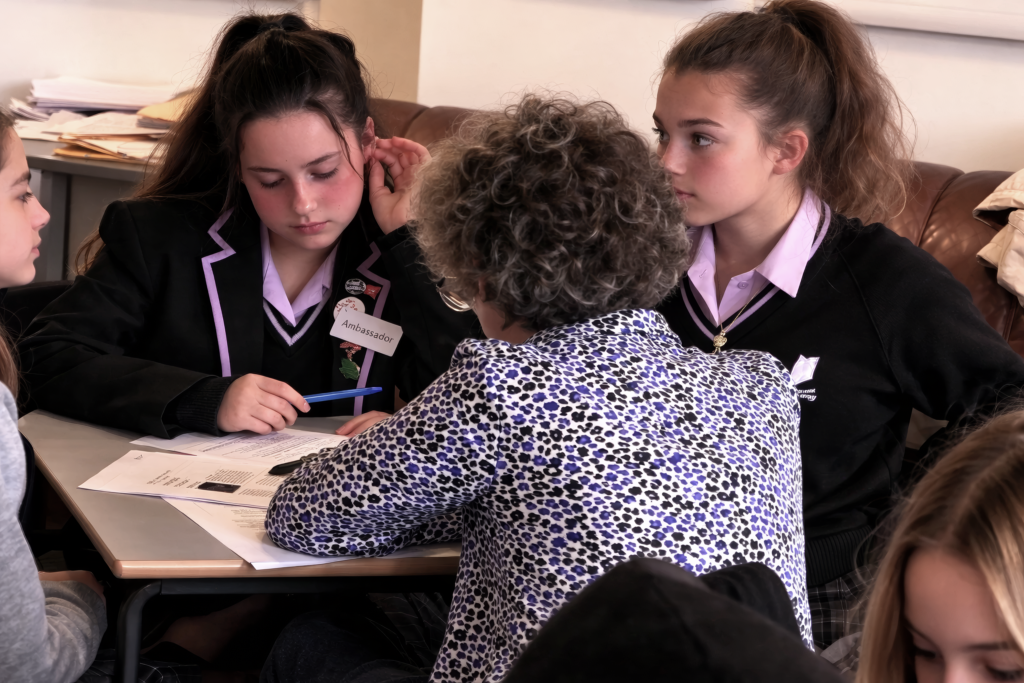
In the past, most notably in the LINC (Language in the National Curriculum) project of the 1980s, linguists worked with teachers to support their own understandings of talk, and this then translated into lots of excellent resources and approaches to teach their students about talk. In the final iteration of the English GCSE that contained any form of non-examined assessment, the Spoken Language Investigation was a source of great enthusiasm and interest, both for teachers and students, and the focus on speech taught them much about language in general. We need a renewed focus on knowledge about spoken language, of this kind. And it can be done now — it doesn’t have to wait for a new curriculum to emerge.
Subjects differ, and English is a fundamentally dialogic subject
The whole edifice of English literary studies would collapse if everyone agreed about texts and could come up with definitive, once and for all, interpretations. Criticism of Shakespeare has continued to thrive, decade after decade, because people keep disagreeing, and coming up with fresh and different angles and interpretations. The book reviewing world, the thriving book group culture and the very desire to talk about books in communities of readers are all dependent on ‘dissensus’ as well as consensus, as Professor Robert Eaglestone puts it. Fully fledged arguments on paper are developed in talk and allow for the construction of more fully formed interpretations.
Recent research by Burgess et al at Bristol University ‘Teachers’ Use of Class Time and Student Achievement’ (2023) compared dialogic approaches versus direct instruction in a large-scale comparison of English and mathematics classes in England, looking at the correlations with GCSE performance. They discovered that there were significant differences between the two subjects. Dialogic approaches had a much stronger, beneficial impact in English than in maths. So, it’s important for schools to recognise this and go beyond one-size-fits-all whole school policies on talk in classrooms, and for English teachers to argue the case for this.
Talk is for thinking
Exploratory talk helps individuals articulate existing thoughts and develop new ones. It also helps students to ‘interthink’ (Professor Neil Mercer) to think better together, building on each others’ ideas. Self-explanation and explaining to others are both well-evidenced aspects of how students can deeply embed and extend their understanding of subject content and ideas. In a recent blog for EMC, Andrew Stones, an Associate Teacher at EMC in 2024-25, describes how dialogic approaches to Jane Eyre at Key Stage 3 impacted on both the students’ reading and their writing, leading to much more sophisticated thinking. As he says at the end of the piece: ‘Whether in reading or writing, oracy is the ‘glue’ which holds the subject together and gives it its distinctive character: a conversation between students, teachers and the texts we study.’ James Britton’s comment ‘Talk is the sea on which all else floats’ remains as true now as it was in the 1960s when he said it.
Talk is deeply related to identity and confidence
The way you talk expresses who you are. So, it’s vital for us to be thoughtful about the way we respond to student talk — recognising that there are strengths in many ways of speaking, and many varieties of English across a range of contexts. Students’ home languages or additional languages, their accents and dialects are a rich resource and cause for celebration, investigation and reflection. They are a set of vital foundations upon which all further language development can be built. You don’t usually dig up the foundations in order to build a strong and stable house. And in the case of spoken language, it can be a house of many different rooms. Students talking together informally to develop a piece of writing, or doing a rap contest, or making a speech in an assembly, or discussing a text in whole class discussion, or telling a personal anecdote or engaged in formal debating, or doing an improvisation as the start of writing a scene in a play, will be using spoken registers in very different but equally valuable and legitimate ways.
Julia Snell and Ian Cushing have both done significant studies on the ways in which the ‘policing’ of spoken language and under-valuing of students’ own uses of language in recent years, in school policies and Ofsted judgements, can have harmful effects on students and their learning, particularly those in minoritized groups. They have shared and built on the powerful work of linguists like Nelson Flores and April Baker-Bell in the USA.
Frameworks and grids for talk have some dangers
In my view, they need to be treated with some caution. Having a talk framework that everyone uses is not the definitive route to better talk, nor does it guarantee development. If anything, if it becomes a routine checklist, it can have the very opposite effect. Clearly aspects of effective communication like body language, eye contact, loudness and pitch all matter. Whispering or averting your gaze when speaking to others is not a recipe for clear communication. But equally, you can do all the paralinguistic things on a list for ‘good communication’ and yet deliver a very poor speech with very poor ideas, or contribute unhelpfully to a discussion.
‘One of the very best drivers for genuine dialogue is a very simple and small shift in the teacher’s role in questioning and orchestrating classroom discussion.’
When it comes to writing, I’ve often quoted Wolsey, Lapp and Fisher’s research (2012) on the importance of global moves versus local operations. In writing, all too often, teachers focus a lot on the local operations, while ignoring the most significant, big picture aspects of what makes a text effective or not. What matters most is ideas, and the handling of those ideas. The same risk, it seems to me, applies to talk. If we’re not careful, we could end up with the equivalent of PEE for talk, where the minutiae of form are foregrounded at the expense of substance.
This is all the more a concern if these lists of features of talk become a means of assessment. Developing strong classroom talk can often be tracked and assessed better, in other ways, for instance by looking at the broader outcomes of talk in terms of subject learning. For example, did classes where talk is embedded produce better writing on texts? Did students engage with the texts more and express more enjoyment of them? Did their memory of texts improve? Were they more confident in using subject-related vocabulary because they had heard and used it multiple times in talk contexts? The proof of the efficacy of talk in learning is in the products of that learning.
Great classroom dialogue doesn’t have to be glitzy and glamorous
It doesn’t have to be hugely complicated and take up whole lessons. It can be simple, small-scale and emerge from very small tweaks to practice. Martin Nystrand, who did substantial and influential research on dialogic learning, talks of ‘dialogic spells’ (or what we in the UK would call ‘dialogic episodes’). This might be just a short period in a lesson, even just five or ten minutes, where students can share thoughts on something that’s been introduced, or an idea that needs unpicking.
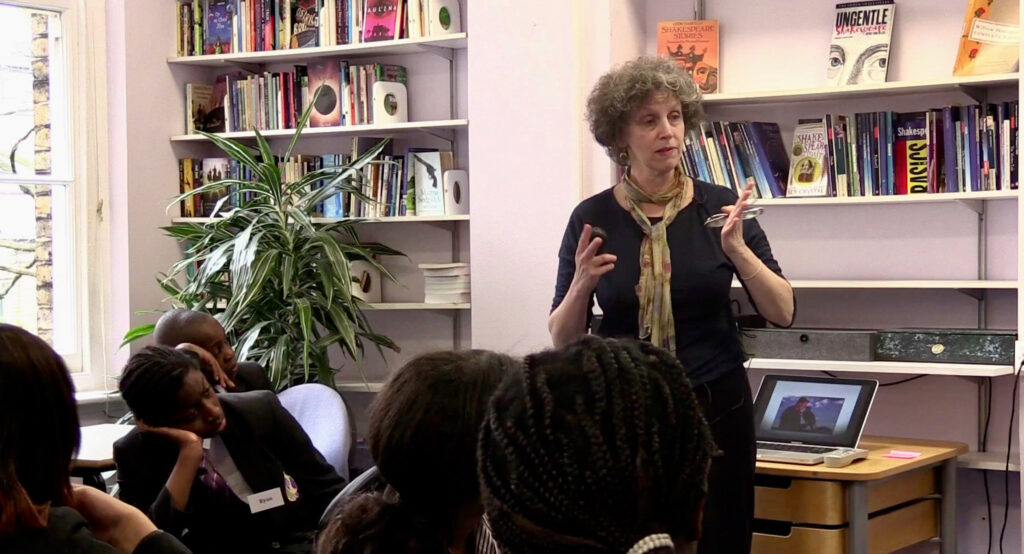
One of the very best drivers for genuine dialogue is a very simple and small shift in the teacher’s role in questioning and orchestrating classroom discussion, moving from the IRE pattern to a more dialogic one. Nystrand talks of the importance of teacher questions being ‘authentic’, the kind of question that genuinely needs thought to answer it, and stresses the importance of ‘uptake’, in other words how the teacher takes up a students’ answer and makes it part of a more developed dialogue. Phrases like ‘Tell me more…’ or ‘But what if I said…?’ or ‘How does that relate to…’ will develop the dialogue, where only using phrases like ‘Yes, that’s right’ or ‘Good answer’ simply close it down. This is something more than the simple ‘open or closed question’ idea. You can ask an open question but if the ‘uptake’ isn’t there, the dialogue is quickly closed down and ‘chains of thought’ fail to develop.
Great talk doesn’t hinge on one or two repetitive strategies
With the renewed interest in classroom talk, including from some who in the past have dismissed it and denied its value, a few very limited talk strategies have appeared and been endlessly discussed on social media and elsewhere. They risk sucking all the oxygen out of the room, limiting the discussion of oracy to fine-tuned versions of these few strategies, rather than the bigger, broader, more generous possibilities for the classroom. Hands up/hands down, cold-calling and think-pair-share have all received huge amounts of attention. Which is best — cold-calling or hands-up? Exactly how long should they think-pair-share for?
As our publication for teachers English Allsorts shows, there are multiple strategies and numerous variations on strategies. The key thing is matching a strategy to the underlying purposes of the lesson, adapting it to the content and the context, being flexible enough to adjust timings and detail in response to what one sees and hears. So, for example, if think-pair-share were to be your chosen approach, would it perhaps be better sometimes as think-pair-new pair-new pair-share for discussion of a challenging text? Or, perhaps, for working on ideas for a new piece of writing it might be pair-new-pair-think-write. Or write-pair-re-write-share.
There’s also a risk that the oracy/talk wheel is now being re-invented at great cost of teacher time and energy. We shouldn’t, of course, be resistant to new ideas, or look back at the past with nostalgia, but equally we’d be foolish to ignore things that have been lost that were once highly effective strategies. In recent weeks, for instance, I’ve seen two examples of talk strategies that were common in the past being used in today’s classrooms, with great success and enthusiasm. One, written up by Andrew McCallum on EMC blog, shows an English teacher using highly effective drama approaches to revise the chosen GCSE poetry anthology. In another, I saw a brilliant example, shared on social media, of a teacher using a talk activity to construct a poem out of fragments before looking at the poem itself. These strategies were common in the past — less so now — and this is a great opportunity to revive them.
Listening is as important as talking
Insisting on equal shares of talk time every lesson isn’t necessarily a complete and accurate measure of how much individual students are learning through talk. In small group discussion, a student can sometimes be very quiet at first — and listening carefully. They might then make a highly apposite, insightful contribution that takes the whole group’s thinking forward. I have witnessed this in action and, in fact, we have a great example in our video archive at EMC. Here, quantity of contributions matters much less than the fact that the student was listening intently, thinking hard and formulating his ideas ready for sharing.
Having said this, it’s important, of course, to encourage all students to participate and voice their views, but not necessarily measuring this lesson by lesson but perhaps rather over a period of time. Progress towards confident participation may take weeks and months, rather than expecting instant ‘performance’, and, especially for unconfident or neurodivergent students, may depend on a climate of acceptance and warm encouragement rather than punitive approaches to failures to respond in whole class dialogue, on demand.
Teacher listening is also very important
Talk for Learning in English depends on teachers being attentive to what’s being said, picking up on cues, probing more deeply, and working out next questions, or contributions in the light of what the students have been saying. This is perhaps the most challenging aspect of talk in English classrooms, and one that deserves a lot more attention in CPD, in my view. It can be supported by jointly watching videos of classroom interactions to explore what’s happening, what the teacher is doing, opportunities seized and ones missed, and so on. This is something that we try to do on EMC courses about talk. In a recent session looking at a snippet from a teacher’s lesson in which she orchestrated whole class discussion, the feedback from teachers was that this was the most valuable aspect of the whole CPD — being able to watch another teacher working with a class and building on their contributions, to take the whole class’ learning to a new level.
Teacher listening is both vital, in the moment, for the furthering of the dialogue but it’s also hugely helpful in helping teachers to be more responsive generally, getting a window into students’ learning, their interests and areas of confidence or uncertainty. It’s a key diagnostic tool and an essential element in developing a responsive pedagogy, where formative assessment is part and parcel of every lesson.
Giving up on good classroom dialogue about the subject isn’t (or shouldn’t be) an option
We don’t say we’ll stop teaching geometry in maths or electromagnetism in physics, because students find these hard. We don’t stop teaching them to write analytical essays because they’re too difficult. We shouldn’t feel that we can abandon talk because it can, for some students, be hard to do and do well. All the more reason for persisting and finding ways of supporting them — and helping them to see its benefits.
Voice 21, Oracy Cambridge and others have many supportive strategies for setting ground rules, helping students to understand how to talk well with each other, and helping the teacher to develop their own confidence in making that happen. Often, teachers find that these simple strategies can acclimatise students to talk activities remarkably quickly. In our project ‘It’s Good to Talk’, we found that sometimes the teachers most nervous about introducing talk into their lessons, who felt their students were least capable of handling classroom talk, became the most enthusiastic converts once they saw what it could do for their students and the quality of their learning.
Featured image: iStock/markOfshell